My Boat My Rules Captain SVG Design: A Designer’s Review
As someone who stitches designs onto everything from tote bags to baby onesies, I approach every new file with a practical eye. How will it actually look once the threads are down? Will it make a customer smile? Does it hold up on the fabric I need to use? Today, I’m putting the My Boat My Rules Captain SVG Tee design through that real-world filter.
First Impression: A Bold, Sarcastic Statement
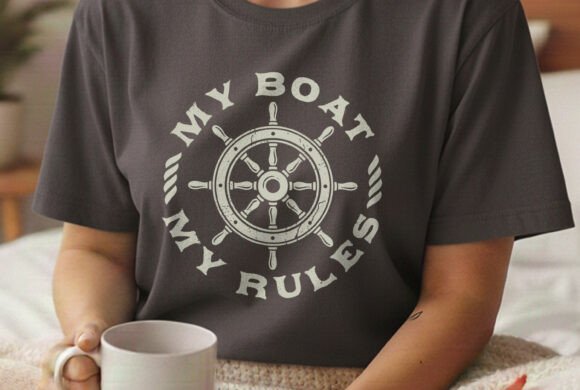
The first thing I notice is the personality. This isn’t a gentle nautical motif; it’s a confident, slightly cheeky declaration. The layout is straightforward—the text is the star. That clarity is excellent for embroidery, where overly fussy compositions can get lost in stitch translation. The provided file size, 4500×5400px, suggests good scalability, which is a relief. It means I can likely resize it for a small hoop on a cap or blow it up for a statement sweatshirt without worrying about pixelation in the core embroidery file.
Where This Design Finds Its Perfect Home
I immediately picture this on a sturdy canvas tote bag for a boat owner. It’s the kind of graphic that turns a simple bag into a personalized gift with a story. For my craft business, it would also be a strong candidate for a premium embroidered patch, something a customer could buy to customize their own gear. The theme resonates with a specific audience—boating lovers, proud captains, anyone with a sarcastic sense of ownership—making it a smart choice for targeted custom apparel like hoodies or aprons in a small shop.
Because it’s categorized under T-Shirt Designs and Graphics, its inherent use is clear, but its application is broader. I’d consider it for a set of kitchen towels for a lake house, or even embroidered onto a pillow cover for a den. The humor gives it a giftability factor, especially for holidays or weddings where the recipient is known for their maritime pride.
The Real Embroidery Scenario: A Custom Sweatshirt Order
Let’s walk through a typical use. A client orders a custom sweatshirt with this design. The clean, bold lettering is a major advantage. In embroidery, text can be tricky—small serifs or thin strokes can fill with stitches and become blobby. This design’s lettering appears robust enough to handle a satin stitch or a crisp fill stitch without losing readability. On a heavyweight sweatshirt fabric, with the right stabilizer, I expect it to pop with nice definition, enhancing the handmade presentation and perceived value.
Points of Caution: Where to Be Careful
No design is universally perfect, and practical judgment means spotting potential pitfalls. The primary caution here involves scale and fabric choice. If you shrink this down for a baby item or a small curved surface like a cap, you must inspect those letter details. At a tiny size, the spacing between letters and the stitch density need careful management to avoid a dense, stiff patch that might not conform nicely to a curved brim.
Similarly, on very textured fabrics (like some blankets) or thin, stretchy fabrics, the clarity of the statement could soften. A dark fabric background would require bright, high-contrast thread colors to keep the message bold. Always, always test the design on scrap fabric first. Run a sample on both a light and dark scrap to check thread contrast and stitch integrity. This step is non-negotiable for professional results and customer trust.
Affecting Your Business and Craft
Using a design like this effectively impacts more than just the stitch. For an Etsy seller or small shop owner, it offers a ready-made design asset that taps into a niche market. That can boost buyer engagement because it speaks directly to someone’s identity. In a printable mockup or digital product preview, the high-resolution files included (AI, EPS, PNG, JPG, SVG) are valuable for creating clean listings.
For the final embroidered product, the design’s straightforwardness lends a professional, clean look that supports brand consistency if you’re building a line of similar sarcastic or lifestyle-themed items. It looks intentional and well-made, which is exactly what creative entrepreneurs want their merchandise to convey.
Practical Designer Notes Before You Hoop Up
Here’s my checklist before I’d run this in a commercial embroidery project or even for a personal gift.
- File Prep: With multiple file types provided, I’d use the vector files (AI, EPS, SVG) for resizing in my embroidery software. The large PNG is great for quick previews.
- Hoop Size & Stabilizer: Determine your final product size first, then choose a hoop that gives you a comfortable margin. Match your stabilizer to the fabric—no shortcuts here.
- Thread Colors: Plan a simple, bold palette. This design likely benefits from one or two main colors for maximum impact.
- Licensing: The product description doesn’t specify license terms. You must confirm licensing before selling finished items or digital products to ensure it’s cleared for commercial use.
- Machine Compatibility: While the file formats are standard, always check that your specific embroidery machine software can cleanly import and process the chosen file type.
Finally, think about the end-use. A tote bag will undergo abrasion; a kitchen towel will be washed frequently. Your stitch density and thread choices should reflect that durability need. For a decorative pillow cover or patch, you can prioritize visual detail a bit more.
The Final Stitch: A Design Built for Real Projects
The My Boat My Rules Captain SVG Tee design, from my experienced standpoint, is a solid, usable graphic. Its strength is its clear personality and scalable foundation. It won’t surprise you with hidden complexity that fails to translate into stitches. It’s the kind of file I’d confidently pull for a last-minute holiday gift embroidery project or add to my small business’s lineup of niche apparel. It does its job: it provides a recognizable, humorous statement that, with proper embroidery technique, will result in a clean, valued finished product that feels both personal and professional. Just remember the golden rule of embroidery—test first, then commit—and this design should sail smoothly from your hoop to your customer’s hands.